M-001
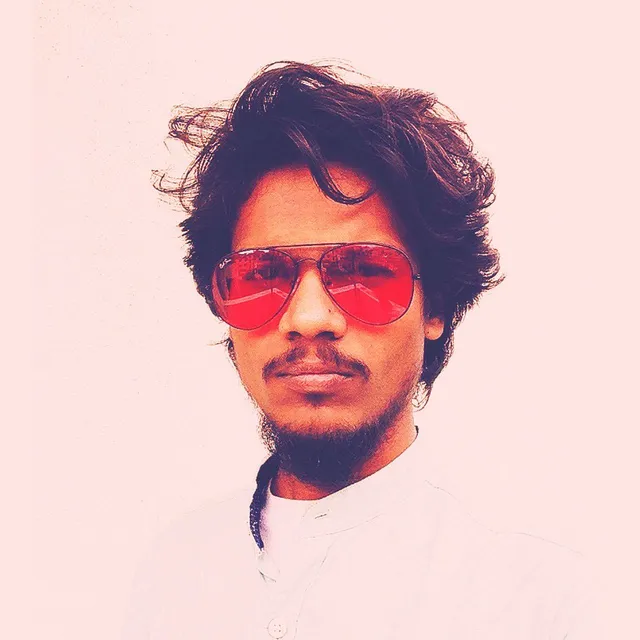
Akash Chaudhari
Designer · Developer · Mumbai
Also known as — akkiipc
Essence
Akash Chaudhari comes from a line of people who make first and explain later—if at all.
He trained in classical music and sound long before he worked as a designer, and he carries one instinct across every medium: an embodied sense for when something is off, and a refusal to stop making with his own hands.
Thread
Design was present before it became a profession.
His grandfather taught drawing. His maternal uncle became a calligrapher and painter. His mother quietly transforms ordinary things into careful acts of craft, carving fruit into flowers because making something beautiful has always been part of how she moves through the world.
The inheritance was environment rather than instruction. What he did with it became his own.
At twelve he began studying Indian classical music in the traditional guru–shishya discipline. Nearly eight years of classical vocal, followed by harmonium and tabla, taught him something that would later become central to his design practice: there are no shortcuts in riyaz. A note placed almost correctly is still wrong.
Those years widened his ear as much as his discipline. Beethoven's late quartets and Bhimsen Joshi could occupy the same week because both seemed to pursue the same destination through different traditions.
Body
College redirected that instinct toward theatre.
He composed music and designed sound for experimental productions, working across competitions such as Purushottam Karandak, Sawai Karandak and Thespo. The productions travelled beyond India to international festivals in Bulgaria and Egypt.
He was never decorating performances with music. He was constructing their emotional architecture—deciding where silence belonged, how long a pause should last, and what feeling should arrive before the audience could name it.
Professional design began in 2016.
The medium changed, but the calibration remained. Years spent hearing a note that was fractionally wrong became years spent seeing a layout that was fractionally unresolved before measurements could explain why.
At Cityflo that instinct became increasingly structural. Rather than thinking only in campaigns or individual visuals, he became interested in the systems beneath them: brand governance, workflows, reusable design tools and the invisible infrastructure that allows creative work to remain consistent as organisations grow.
Outside employment he continued building small independent tools—QR links, publishing systems and experiments that solve practical problems through careful, durable design rather than scale.
Across all of this, the medium continues to change. The underlying instinct does not.
Turns
Every creative career eventually offers the same trade.
As responsibility increases, making often gives way to managing. Many people accept that exchange.
He has repeatedly resisted it.
Not because leadership lacks value, but because making remains the place where understanding is earned. The people whose work he most admires never fully stepped away from practice. They stayed close enough to notice when something subtle had drifted out of alignment.
His own working principle—
Make it exist first. Make it perfect later.
—is less a productivity technique than a way of remaining close to the craft itself.
Now
His work is increasingly organised around a single question:
How can a person's work be understood rather than merely displayed?
Project Atlas is the clearest expression of that direction so far. It brings together ideas that have appeared throughout his work for years: documentation over promotion, narrative before metadata, evidence before assertion, and preservation over publication.
He is still becoming whatever those ideas eventually make possible.
The thread is now visible enough that the work no longer appears as a collection of unrelated projects. It reads as one body of work, developing across different mediums toward the same concern.
— Drafted by Atlas Editorial, from conversation. v1.1 · 4 July 2026